Quick Answer
The most effective way to remove patio stains in Toronto is to identify the stain type first, then apply a targeted cleaner. Oil and grease require a degreaser, rust needs an acid-based treatment, leaf tannins respond to oxygen bleach, mold and algae to vinegar or sodium percarbonate, and salt residue to warm water and repeated scrubbing. Using the right treatment the first time saves time and protects your surface.
Toronto patios collect a wide variety of stains throughout the year. Winter brings road salt and freeze-thaw damage. Spring and summer bring mold, algae, BBQ grease, and bird droppings. Fall leaves behind tannin stains from wet leaves sitting on the surface for weeks.
This guide breaks down each stain type, what causes it, and the most effective treatment for concrete, natural stone, and tile patios. The approach matters as much as the effort.
Why Identifying the Stain Type Matters
Patio surfaces are porous. Concrete, natural stone, and tile all absorb liquids at different rates, which means a stain that sits for days starts to bond with the material beneath the surface. Applying the wrong cleaner does not just fail to remove the stain. It can bleach the surface, strip sealant, damage plant life nearby, or in the case of chlorine bleach on rust, permanently set the stain darker.
The sections below cover the most common patio stains in Toronto and the treatments that actually work for each one.
How to Remove Each Type of Patio Stain
Oil and Grease Stains
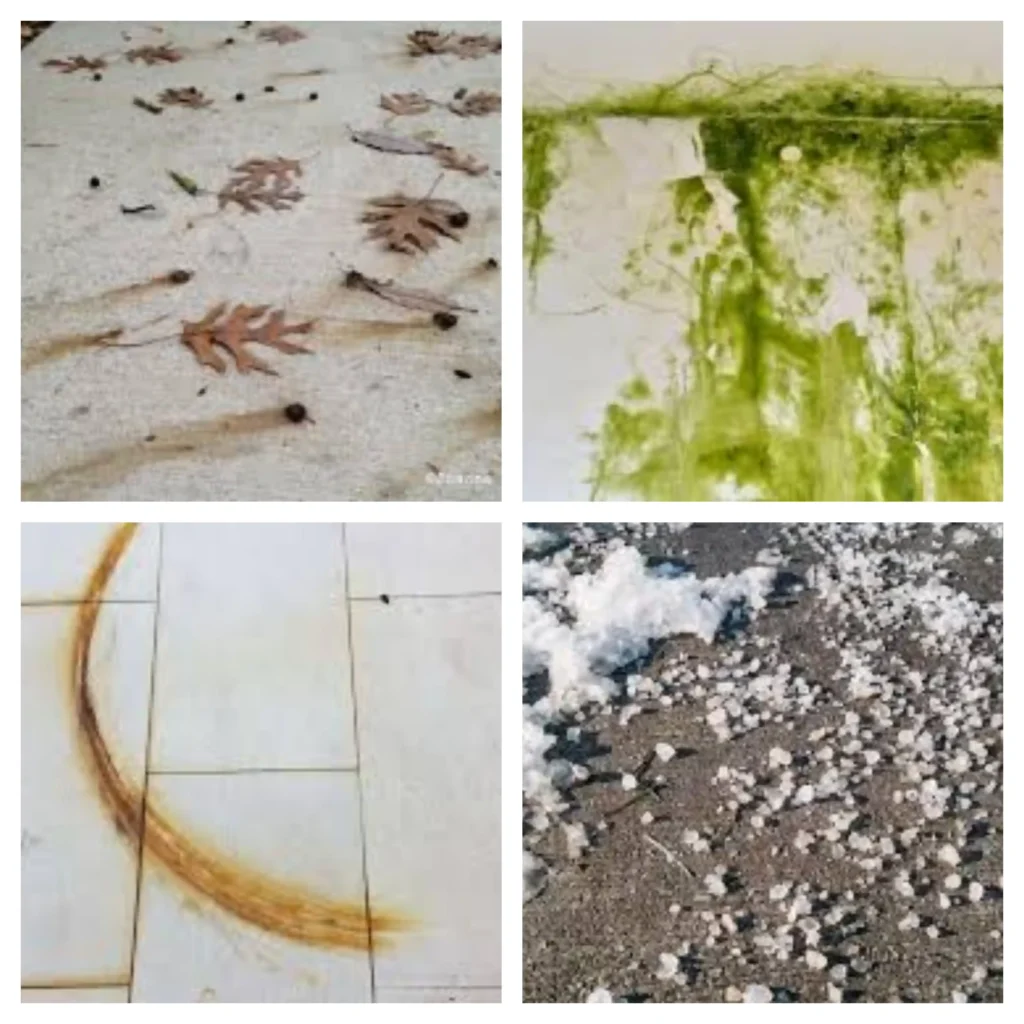
Common cause: BBQ drippings, cooking oil, automotive fluids near garages.
Why they are stubborn: Oil penetrates concrete pores quickly and bonds with the surface. The longer it sits, the deeper it goes.
Treatment: Sprinkle an absorbent material such as cat litter, sawdust, or baking soda directly on the stain and leave it for 30 to 60 minutes to draw out the oil. Sweep it away, then apply a commercial concrete degreaser. Let it sit for 10 minutes, scrub with a stiff brush, and rinse thoroughly.
What to avoid: Do not use dish soap as the primary treatment on deep oil stains. It works for surface residue but will not penetrate deep enough for set-in grease.
Rust Stains
Common cause: Metal furniture legs, planters, rebar exposed through cracked concrete, or metal tools left on the surface.
Why they are stubborn: Rust contains iron oxide, which bonds tightly to concrete. Toronto’s humid summers and wet springs accelerate oxidation on any metal in contact with the surface.
Treatment: Apply a commercial rust remover formulated for concrete, or make a paste with lemon juice and salt. Apply directly to the stain, leave for 10 to 15 minutes, scrub with a stiff brush, and rinse. For older or larger rust stains, a product containing oxalic acid works more effectively.
What to avoid: Never use chlorine bleach on rust stains. It reacts with iron oxide and permanently darkens the stain.
Leaf and Tannin Stains
Common cause: Wet leaves sitting on the patio surface through fall and winter. Toronto’s maple, oak, and poplar trees are particularly high in tannins.
Why they are stubborn: Tannins are natural plant-based acids that penetrate and discolour porous surfaces. Leaves left on concrete over winter have months to set the stain deep.
Treatment: Apply an oxygen bleach solution (sodium percarbonate mixed with warm water) to the stained area and let it sit for 15 to 20 minutes. Scrub with a stiff brush and rinse. For older or darker tannin stains, a second application is often needed.
Prevention tip: Clear leaves from your patio regularly through October and November to prevent tannins from setting into the surface.
Mold, Mildew, and Algae
Common cause: Shaded areas, poor drainage, and Toronto’s humid summers create ideal conditions for organic growth on patio surfaces.
Why they are stubborn: Mold and algae anchor to the surface and spread through spores. Cleaning the visible growth without treating the surface leaves spores behind that regrow quickly.
Treatment: Mix white vinegar with water at a 1 to 1 ratio, or use an oxygen bleach solution for heavier growth. Apply to the affected area, leave for 15 minutes, then scrub and rinse. For large or persistent growth, a commercial outdoor mold and algae remover designed for hard surfaces will be more effective.
What to avoid: Chlorine bleach kills surface mold but does not penetrate the surface to remove the root structure. Growth returns faster after chlorine treatment than after oxygen bleach.
Salt and De-Icer Residue
Common cause: Road salt and de-icing products tracked in from sidewalks and driveways during Toronto winters.
Why they are stubborn: Salt leaves a white hazy film on concrete as it dries. It also draws moisture out of the concrete surface, contributing to surface scaling and micro-cracking over time.
Treatment: Warm water and a stiff scrub brush is the most effective approach. Rinse multiple times to flush salt out of the surface pores. For heavy accumulation, a diluted white vinegar solution helps break down the mineral deposits before rinsing.
Timing: Treat salt stains in early spring before the warm weather drives remaining moisture deeper into the concrete.
Bird Droppings
Common cause: Pigeons and other urban birds are a consistent problem on Toronto patios, particularly those near parks, trees, or rooftops.
Why they are stubborn: Bird droppings contain uric acid, which etches into concrete and stone if left to dry. Repeated exposure creates permanent surface discolouration.
Treatment: Pre-soak dried droppings with warm water for 10 minutes before attempting removal. This prevents dry scraping, which can scratch the surface and release airborne particles. Apply a dish soap solution, scrub gently, and rinse. For staining left after the waste is removed, an enzyme-based cleaner designed for organic stains works well.
Health note: Wear gloves and avoid dry scraping bird droppings. Dried waste can carry bacteria and fungal spores that are harmful when inhaled.
Paint and Dye Stains
Common cause: Spilled paint during home renovation, furniture dye, or children’s chalk and paint products.
Treatment: For fresh paint, blot immediately and rinse with water. For dried latex paint, apply a paint stripper safe for concrete and scrub once softened. Oil-based paint requires a stronger solvent. Chalk and water-based children’s paints typically come off with warm water and scrubbing.
Important: Always test any solvent or paint stripper on a small, inconspicuous area first to confirm it does not discolour or etch the surface.
Does Surface Type Change the Treatment?
Yes. The treatments above are primarily designed for concrete patios, which are the most common surface type in Toronto. If your patio is a different material, keep these differences in mind.
| Surface Type | Key Considerations |
| Natural stone (flagstone, slate, limestone) | Avoid acidic cleaners like vinegar or lemon juice. Acid etches natural stone. Use a pH-neutral stone cleaner instead. |
| Interlocking brick or pavers | Cleaners can wash into the joints and damage the sand or polymeric base. Rinse carefully and avoid soaking the joints. |
| Porcelain and ceramic tile | More resistant to staining but grout lines absorb stains readily. Use a grout-specific cleaner for discoloured joints. |
| Stamped or decorative concrete | Sealed surfaces need gentler treatment. Harsh scrubbing or strong chemicals can strip the sealant layer. |
How to Prevent Patio Stains in Toronto
Most patio stains are easier to prevent than to remove. A few habits go a long way toward keeping your patio surface in good condition year round.
- Seal your concrete patio every 2 to 3 years. Sealant fills surface pores and makes stains much easier to clean before they set.
- Place rubber or plastic pads under metal furniture legs to prevent rust transfer.
- Clear leaves from the patio surface regularly through October and November.
- Rinse your patio in early spring to flush out winter salt before it works deeper into the surface.
- Clean up BBQ spills and food residue immediately rather than letting them dry.
- Use a patio mat or rug under dining areas to catch food and grease before it reaches the concrete.
When to Call a Professional Patio Cleaning Service
DIY stain removal works well for isolated or recent stains. There are situations where professional cleaning delivers better results and saves time.
- Stains covering a large surface area
- Multiple stain types across the same patio that require different treatments
- Deep-set stains that have not responded to repeated home treatments
- Natural stone or specialty surfaces where the wrong product could cause permanent damage
- Patios that have not been treated in several seasons
Our patio cleaning service in Toronto covers all surface types and stain categories across Toronto and the GTA. We identify the right treatment for each area of your patio and get results without risking surface damage.
Frequently Asked Questions
What removes old stains from a concrete patio?
Old stains require targeted treatments based on the stain type. Rust responds to oxalic acid-based removers, tannin stains to oxygen bleach, and oil to commercial degreasers. For very old or deep stains, repeated applications and longer dwell times are needed before scrubbing.
Can I use bleach to clean my patio in Toronto?
Oxygen bleach (sodium percarbonate) is safe and effective for organic stains on concrete. Chlorine bleach should be avoided near plants and grass, and should never be used on rust stains as it darkens them permanently.
How do I remove white stains from my patio after winter?
White haze after winter is typically salt residue. Warm water and thorough scrubbing with a stiff brush removes most of it. Rinse multiple times to flush salt out of the surface pores. A diluted vinegar solution helps break down stubborn mineral deposits.
Will stains come back after cleaning?
Stains can return if the surface is not sealed after cleaning. Sealing concrete fills the pores that absorb staining agents, making future cleaning easier and reducing how quickly stains reappear. Re-seal every 2 to 3 years for best results.
Does vinegar damage concrete patios?
Diluted white vinegar is generally safe for concrete and effective on mold, algae, and light mineral deposits. However, avoid using undiluted vinegar repeatedly as its acidity can gradually etch the surface over time. It should also not be used on natural stone.
Need Help Removing Patio Stains in Toronto?
If your patio has stains that are not responding to home treatments, our professional patio cleaning service in Toronto is the next step. You may also find our guide on how to clean a concrete patio in Toronto useful for general maintenance between professional visits.
Get a free quote for patio stain removal in Toronto.
Call (647) 768-7594 | balconycleaningtoronto.ca