Quick Answer
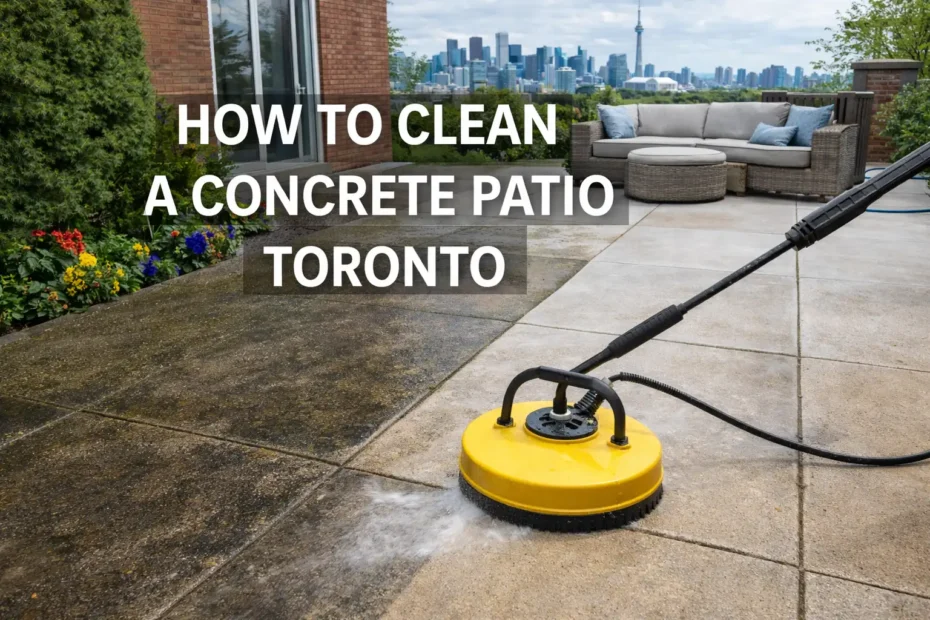
To clean a concrete patio in Toronto, sweep away loose debris, apply a solution of warm water and dish soap or white vinegar, scrub with a stiff-bristled brush, and rinse thoroughly. For stubborn stains, mold, or algae buildup, use a targeted cleaner suited to the stain type. Toronto’s climate creates specific challenges including freeze-thaw salt residue in spring and heavy organic buildup in fall.
A concrete patio takes a beating in Toronto. Between winter road salt tracked in from boots, spring algae growth, summer BBQ grease, and fall leaf stains, the buildup is constant. The good news is that concrete is one of the most forgiving surfaces to clean when you use the right approach.
This guide covers everything you need to know to clean your concrete patio effectively, from basic seasonal maintenance to tackling the toughest stains common in Toronto backyards.
What You Need Before You Start
You do not need specialized equipment for most concrete patio cleaning jobs. Here is what works for the majority of Toronto patios:
Tools
- Stiff-bristled scrub brush or deck brush
- Garden hose with spray nozzle
- Bucket
- Broom or leaf blower for dry debris
- Protective gloves
Cleaning Solutions
- Dish soap and warm water: effective for general grime and light stains
- White vinegar diluted in water: good for mild mold and algae
- Oxygen bleach (sodium percarbonate): safe for concrete, effective on organic stains
- Commercial concrete degreaser: for oil, grease, and BBQ stains
- Baking soda paste: for rust spots and localized stains
Avoid chlorine bleach on concrete if you have surrounding plants or grass. It can damage vegetation and leave a residue that weakens the concrete surface over time.
How to Clean a Concrete Patio: Step by Step
Step 1: Clear the Patio
Remove all furniture, planters, and accessories. Set them aside and clean them separately if needed. This gives you full access to the surface and prevents you from working around obstacles.
Step 2: Sweep and Remove Loose Debris
Use a stiff broom or leaf blower to clear leaves, dirt, and loose grit. Pay attention to corners and edges where debris collects. Removing dry material first makes the wet cleaning far more effective.
Step 3: Pre-Wet the Surface
Wet the entire patio with a garden hose before applying any cleaning solution. This prevents the cleaner from absorbing too quickly into the concrete and helps loosen surface dirt.
Step 4: Apply Your Cleaning Solution
Mix your chosen cleaner in a bucket and apply it evenly across the patio surface. For general cleaning, a solution of two tablespoons of dish soap per litre of warm water works well. Let it sit for 5 to 10 minutes.
Step 5: Scrub
Using a stiff-bristled deck brush, scrub in circular motions across the entire surface. Apply more pressure in high-traffic areas and around the edges. Work in sections so the solution does not dry before you rinse.
Step 6: Rinse Thoroughly
Rinse the entire patio with a garden hose, working from one end to the other so dirty water flows away from clean areas. Make sure no cleaning solution residue remains, as it can attract dirt when dry.
Step 7: Let It Dry Completely
Allow the concrete to dry fully before returning furniture. In Toronto’s humid summers this can take 2 to 4 hours. In cooler or overcast conditions, give it longer.
How to Remove Common Stains from a Concrete Patio in Toronto
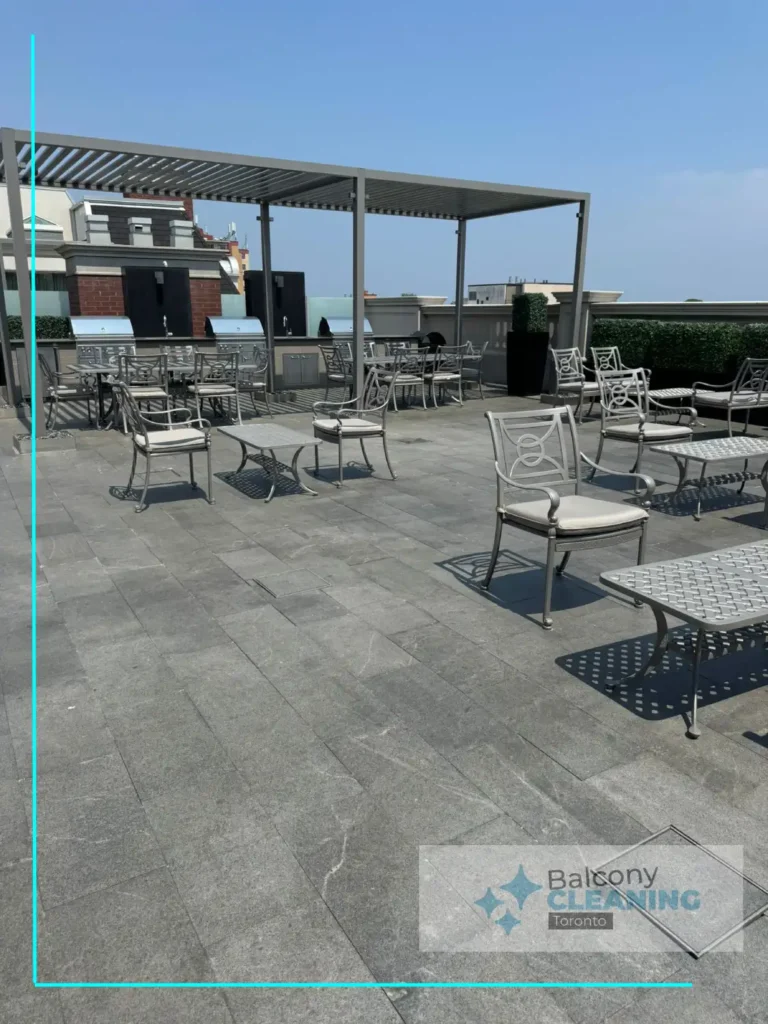
Toronto patios develop specific stains based on the season and the surrounding environment. Here is how to treat the most common ones.
| Stain Type | Recommended Treatment | Notes |
| Mold and algae | Oxygen bleach solution or diluted white vinegar | Common after Toronto winters. Let solution sit 10 min before scrubbing. |
| Road salt residue | Warm water and dish soap, scrub well | Leaves white hazy marks. Rinse multiple times. |
| Leaf stains | Dish soap and warm water or oxygen bleach | Tannins from leaves stain concrete. Treat before they set. |
| Grease and BBQ oil | Commercial concrete degreaser | Apply directly, let absorb, then scrub and rinse. |
| Rust spots | Baking soda paste or commercial rust remover | Do not use chlorine bleach, it sets rust deeper. |
| Bird droppings | Warm water soak, then dish soap scrub | Pre-soak to avoid dry scraping which spreads bacteria. |
Toronto-Specific Challenges for Concrete Patios
Toronto’s climate creates cleaning challenges that homeowners in warmer cities do not face. Understanding these helps you clean more effectively and protect your concrete long term.
Freeze-thaw cycles
Toronto winters involve repeated freezing and thawing, which opens micro-cracks in concrete. Dirt, salt, and moisture work deeper into the surface over time. Spring cleaning should always include a thorough rinse to flush out any embedded material.
Road salt and de-icer residue
Salt tracked in from sidewalks and driveways leaves a white hazy film on concrete. It also accelerates surface deterioration. Cleaning it off in early spring prevents long-term damage.
Heavy organic buildup
Toronto’s large tree canopy means patios collect significant leaf debris in fall. Wet leaves left on concrete over winter leave deep tannin stains that are harder to remove by spring.
Humid summers
Warm, humid conditions from June through August accelerate mold and algae growth on shaded concrete areas. A mid-summer clean prevents buildup from becoming a larger problem by fall.
Should You Pressure Wash a Concrete Patio in Toronto?
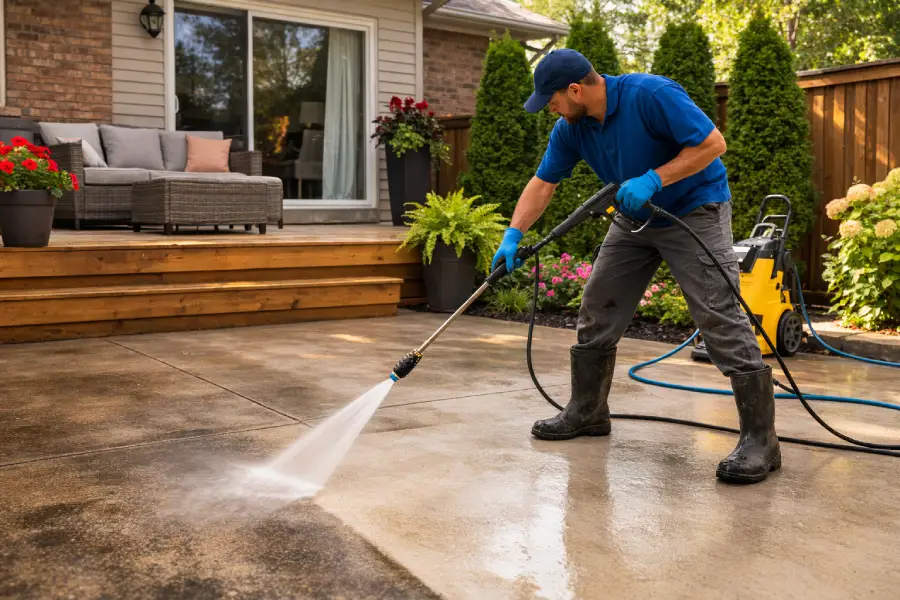
Pressure washing is effective on concrete patios, but it comes with trade-offs. A pressure washer set between 1500 and 3000 PSI can remove deep stains, algae, and embedded grime that manual scrubbing cannot reach.
However, using too much pressure strips the surface layer of concrete, accelerates crack formation, and can dislodge mortar in older patios. If you use a pressure washer, keep the nozzle at least 30 centimetres from the surface and use a fan tip rather than a pinpoint nozzle.
For most residential patios in Toronto, a thorough manual scrub with the right cleaning solution delivers excellent results without the risk. Pressure washing is best reserved for heavily soiled surfaces or patios that have not been cleaned in several years.
How Often Should You Clean a Concrete Patio in Toronto?
For most Toronto homeowners, two deep cleans per year is the right approach: one in spring after the snow melts to remove salt, grit, and winter grime, and one in late fall before the first frost to clear leaf stains and prepare the surface for winter.
Patios in shaded areas or those under heavy tree cover may benefit from an additional mid-summer clean to address mold and algae growth. High-traffic patios used for regular entertaining should also be spot-cleaned after each use.
When to Call a Professional Patio Cleaning Service in Toronto
DIY cleaning works well for regular maintenance, but there are situations where a professional service delivers better results with less effort.
- Deep-set stains that have not responded to repeated cleaning
- Heavy mold or algae covering a large surface area
- Patios that have not been cleaned in multiple seasons
- Older concrete that needs careful handling to avoid surface damage
- Large patio areas where manual scrubbing is impractical
At Balcony Cleaning Toronto, our patio cleaning service in Toronto covers all concrete surface types and stain categories. We bring the right equipment and products to restore your patio without risking surface damage.
Frequently Asked Questions
What is the best cleaner for a concrete patio in Toronto?
For general cleaning, warm water and dish soap is effective and safe. For mold, algae, or organic stains, oxygen bleach (sodium percarbonate) works well without damaging concrete or nearby plants. Avoid chlorine bleach on patios with surrounding vegetation.
Can I use a pressure washer on my concrete patio?
Yes, but keep the pressure between 1500 and 3000 PSI and maintain at least 30 centimetres of distance. Too much pressure strips the surface and accelerates cracking. A manual scrub with the right cleaner is safer for older concrete.
How do I remove white salt stains from my patio after winter in Toronto?
Salt haze responds well to warm water and a thorough scrub with dish soap. Rinse multiple times to flush the salt out of the surface pores. Treat it in early spring before it has time to penetrate deeper into the concrete.
How long does it take to clean a concrete patio?
A standard residential patio typically takes 1 to 2 hours for a thorough manual clean, plus 2 to 4 hours of drying time before you can return furniture. Heavily soiled patios or larger surfaces will take longer.
Is it worth sealing a concrete patio after cleaning?
Yes. Sealing concrete after a deep clean protects against staining, slows mold and algae regrowth, and makes future cleaning easier. It is particularly worthwhile in Toronto given the freeze-thaw cycles that open surface pores over time.
Need a Professional Patio Clean in Toronto?
If your patio needs more than a DIY clean, our professional patio cleaning service covers all concrete, stone, and tile surfaces across Toronto and the GTA. We also offer deck cleaning in Toronto for wood and composite surfaces.