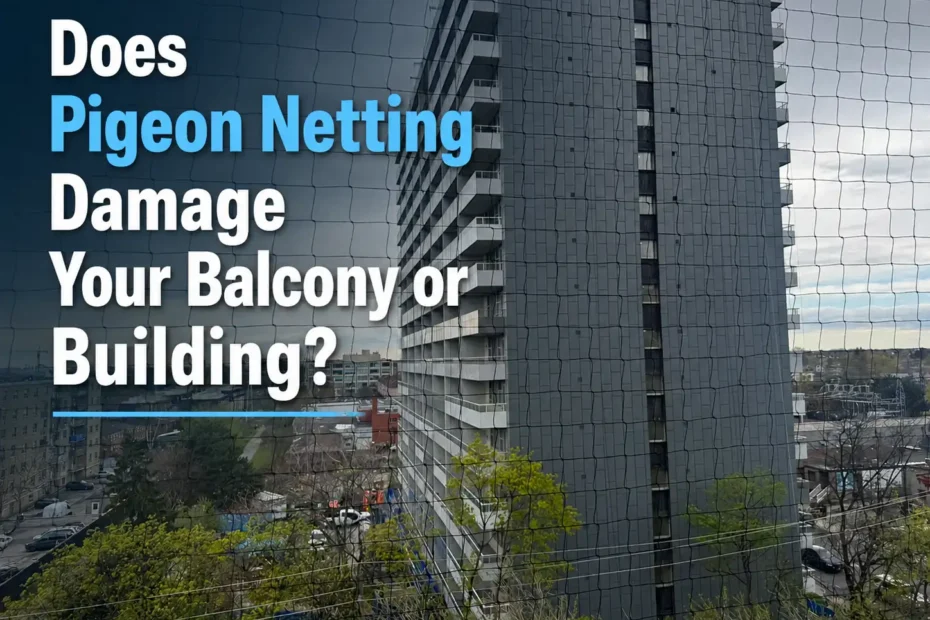
The short answer: No. Professional pigeon netting does not damage your balcony or building when installed correctly. Stainless steel anchors are secured into masonry or concrete without affecting structural integrity, and UV-stabilized polyethylene nets place no meaningful load on the facade. The risk of damage comes from improper DIY installation, not from the netting system itself.
This is one of the most common concerns condo owners and property managers raise before booking a netting installation in Toronto. Here is a clear breakdown of how the system works, what actually goes into the building, and what to watch out for.
How Pigeon Netting Is Anchored to a Building
A professionally installed netting system uses two main components: anchor points and the net itself.
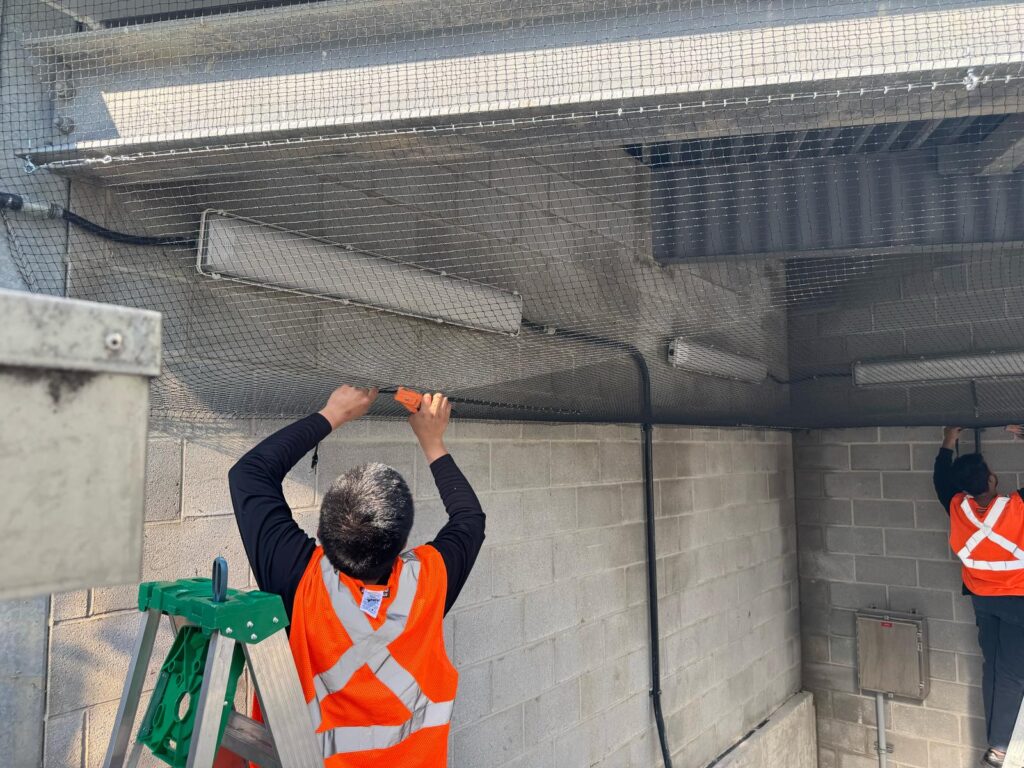
Anchor points are small stainless steel eyelets or hooks drilled into the balcony slab edge, railing frame, or parapet wall. The holes drilled are typically 6 to 8mm in diameter, comparable to a standard wall anchor used to hang a picture frame. Once the eyelet is set, the hole is sealed with weatherproof sealant to prevent water ingress.
The net is made of UV-stabilized polyethylene mesh, tensioned across the anchor points to cover all entry areas. A properly tensioned net is taut but flexible. It holds its shape without applying pressure to the structure.
Neither component compromises the waterproofing membrane, load-bearing capacity, or structural integrity of the balcony slab or building facade.
What Could Cause Damage and How to Avoid It
Damage associated with bird netting almost always traces back to one of three causes.
- Improper anchor placement. Drilling into expansion joints, drainage channels, or areas with existing cracks can worsen existing issues. A professional installer inspects the surface before drilling and selects anchor points on solid material.
- Unsealed holes. Any penetration into exterior concrete or masonry must be sealed immediately after anchor installation. Unsealed holes allow water to enter, which freezes in winter and expands the opening over time. This is standard practice in professional installations and the most common omission in DIY attempts.
- Incorrect tension. Over-tensioned nets can pull anchor points or stress the frame they attach to. Properly installed nets are tensioned to manufacturer specifications, firm enough to exclude birds and flexible enough to absorb wind load without stressing anchor points.
Toronto’s freeze-thaw cycle adds an extra layer of importance to proper sealing. The city experiences an average of 50 to 70 freeze-thaw cycles per year, meaning any unsealed penetration in an exterior surface is exposed to repeated expansion and contraction stress throughout the winter months.
Will Netting Leave Marks on the Facade?
When a net is removed or replaced, the anchor points leave small filled holes in the masonry or concrete, similar to what you would see after removing any exterior hardware. These are not visible from street level and do not affect the waterproofing or appearance of the facade in any meaningful way.
The net itself, when properly tensioned, does not rub or abrade the balcony surface. It sits clear of the floor and walls, held in place by the anchor points along the perimeter.
Does Your Condo Board Need to Approve It?
In most Toronto condo buildings, yes. Drilling into common element surfaces, which typically includes the balcony slab, exterior walls, and railing frame, requires written approval from the property management company or condo board. This is a building governance requirement, not a structural one.
Most condo boards in Toronto approve netting installations readily, particularly when the request is accompanied by a professional quote and documentation of the materials being used. The alternative, which is ongoing pigeon activity, droppings accumulation, and accelerating concrete corrosion, represents a far more significant long-term cost for the building.
The Real Risk: What Happens Without Netting
The structural argument actually runs in the opposite direction. Pigeon droppings are highly acidic, with a pH between 3 and 4.5. Over time, accumulated droppings corrode concrete, oxidize metal railings, and degrade waterproofing membranes on balcony slabs. Buildings in Toronto’s downtown core that host persistent pigeon colonies often face accelerated concrete spalling and railing corrosion that requires costly repairs.
A netting installation that creates 6mm anchor holes is negligible compared to the surface damage caused by years of unmanaged bird activity.
Get a Professional Assessment from Balcony Cleaning Toronto
If you are considering bird exclusion for your condo or building and want to understand exactly what the installation involves, Balcony Cleaning Toronto offers on-site assessments with no obligation. Our team works across Toronto and the GTA, and we can provide the documentation your condo board needs to approve the project. Visit our bird netting service page to learn more about how we work, or head to the Balcony Cleaning Toronto homepage to get in touch and book a free quote.
Get a free quote for patio stain removal in Toronto.
Call (647) 768-7594 | balconycleaningtoronto.ca