
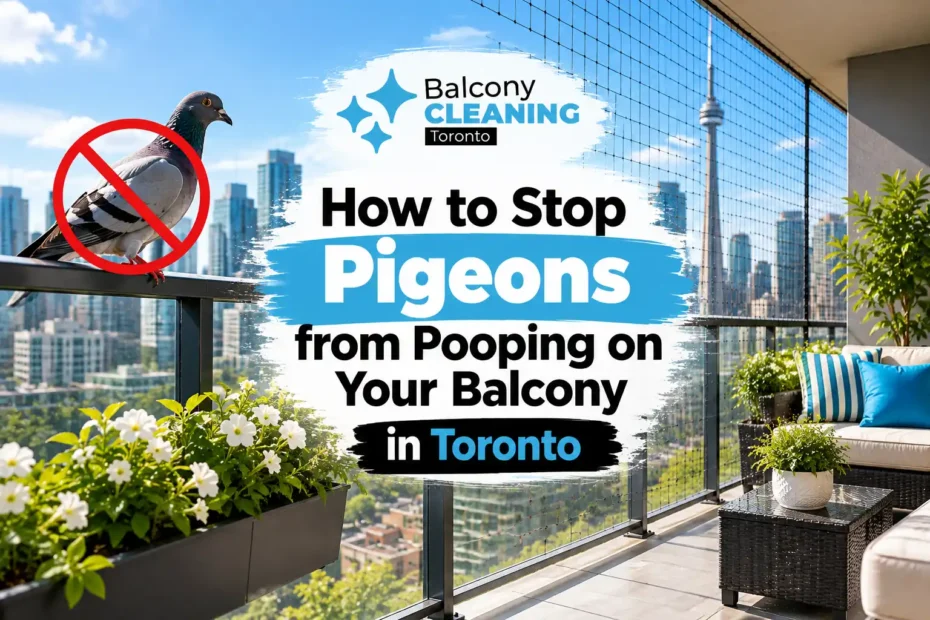
The short answer: The most effective methods to stop pigeons from pooping on a Toronto balcony are removing food sources, eliminating roosting spots, and installing a physical barrier. Of these, only a physical barrier such as netting provides a permanent solution. Deterrents like spikes, reflective tape, and decoys reduce activity temporarily but do not stop pigeons from returning once they have established a roosting habit.
Pigeons are a fixture of Toronto’s urban landscape, particularly around older neighborhoods with brick buildings, heritage lofts, and industrial conversions like Liberty Village, Parkdale, and parts of the East End. They are also increasingly common in newer condo towers near the waterfront, where ledges, mechanical units, and balcony overhangs give them exactly what they need.
If your balcony has become a regular stop, here is what actually works and what does not.
Why Pigeons Choose Your Balcony
Pigeons are not random. They choose roosting spots based on three things: shelter from wind and rain, a flat surface to land on, and proximity to food.
Balconies check all three boxes, especially on floors three through ten where wind is lower and foot traffic is minimal. Once a pigeon lands and finds the spot comfortable, it marks it with pheromones and returns. Other pigeons in the flock follow.
That is why cleaning alone does not solve the problem. Removing the droppings removes the visible mess but not the scent markers. The birds come back to the same spot within days.
What Actually Works
Remove food sources first
This is the starting point for any pigeon problem.
Bird feeders are the most common cause of balcony pigeon activity in Toronto residential buildings. Even feeders intended for smaller birds attract pigeons reliably. Remove them entirely if you have an active pigeon problem.
Food scraps, open compost, and pet food left on the balcony also draw birds in. Clean up after every meal outdoors and store anything edible in sealed containers.
Eliminate roosting spots
Pigeons need a flat, stable surface to land and settle. Making your balcony less comfortable reduces visits, though it does not eliminate them entirely.
- Bird spikes on narrow ledges, railing tops, and window sill edges prevent landing on those specific surfaces. They work on ledges but are ineffective on open balcony floors where birds have room to maneuver around them.
- Reflective tape and visual deterrents such as hanging CDs or reflective pinwheels create light disturbance that unsettles pigeons temporarily. Most birds habituate to them within a few weeks.
- Decoy predators like plastic owls and hawk kites have the same limitation. Pigeons learn quickly that a stationary owl is not a threat and stop responding to it.
These methods reduce activity in the short term and work best as a complement to a more permanent solution, not as a replacement for one.
Install a physical barrier
This is the only method that reliably stops pigeons from accessing a balcony long term.
A properly installed netting system covers the full open face of the balcony, from the floor to the ceiling, closing off the space entirely. Birds cannot enter. There is no habituation effect because there is no way in.
For Toronto condo balconies, netting is installed with small stainless steel anchors drilled into the balcony slab or railing frame. The holes are 6 to 8mm in diameter and sealed immediately after installation to prevent water ingress. The net itself is UV-stabilized polyethylene, which holds up through Toronto winters without losing tension or becoming brittle.
Most condo boards in Toronto approve netting installations when accompanied by a professional quote and materials documentation. The alternative, which is ongoing droppings accumulation and the surface damage that follows, is a harder argument for a board to defend.
What Does Not Work
- Ultrasonic repellers. No peer-reviewed evidence supports their effectiveness on pigeons. Birds do not rely on the frequency ranges these devices emit for communication or navigation.
- Chemical repellents. Sticky gels and taste aversions are difficult to maintain on a balcony surface and require repeated reapplication. Pigeons generally avoid the treated surface itself but continue landing nearby.
- Cleaning without exclusion. As noted above, removing droppings does not remove scent markers. Without a barrier, cleaned balconies are typically reoccupied within days.
How Long Before the Problem Gets Worse
Pigeon colonies grow. A pair that establishes a roosting spot on your balcony in spring will typically produce two to three broods of two chicks each through the warmer months. By fall, a two-bird problem can become a six or eight bird problem.
The droppings volume scales with the flock size. Pigeon uric acid has a pH of around 3 to 4.5, which is corrosive enough to etch concrete, oxidize metal railings, and degrade waterproofing membranes on balcony slabs over one to two seasons.
The practical takeaway is that acting early is significantly cheaper than acting after a colony has established.
If You Already Have a Mess to Deal With
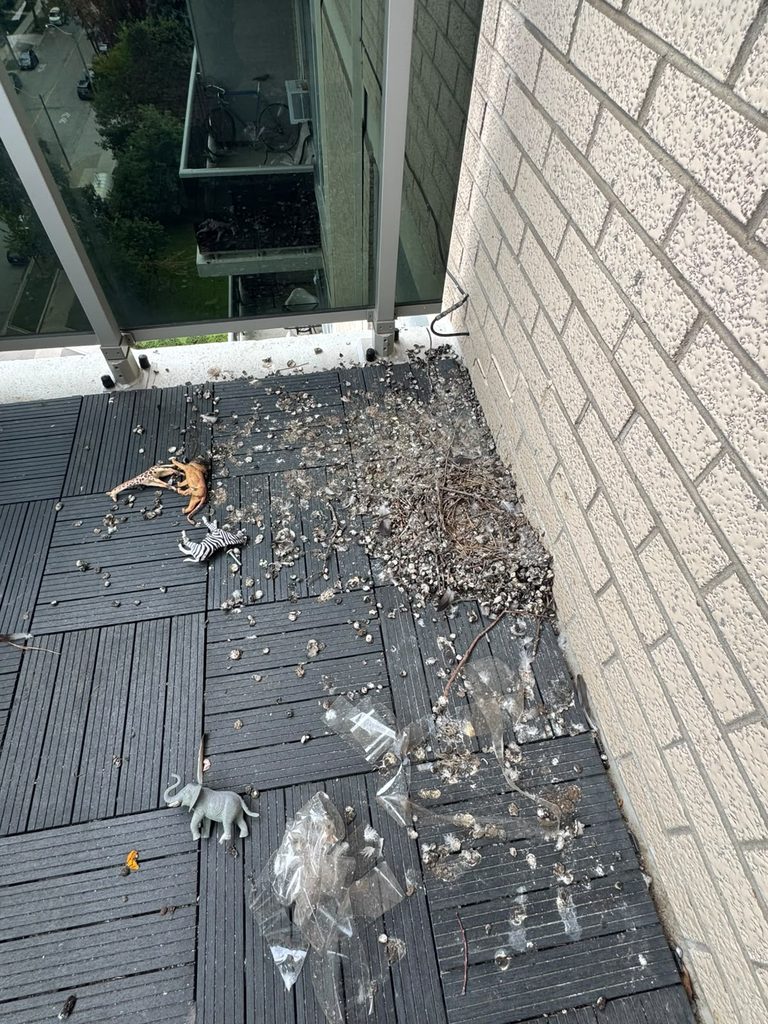
Before installing any deterrent or barrier, the balcony needs to be properly cleaned and disinfected. Dried droppings on concrete require soaking before removal to prevent spores from becoming airborne. We cover the full process in our guide on cleaning pigeon poop off a concrete balcony in Toronto.
Skipping the clean before installing netting traps droppings under the barrier where they continue to damage the surface and cannot be reached easily.
Stop the Problem at the Source
If pigeons have made your balcony a regular spot, the most effective next step is a physical barrier installed by someone who knows Toronto condo building requirements. Balcony Cleaning Toronto handles both the cleanup and the exclusion, so you are not dealing with two separate contractors. Visit our bird exclusion service page for details, or head to balconycleaningtoronto.ca to book a free assessment.